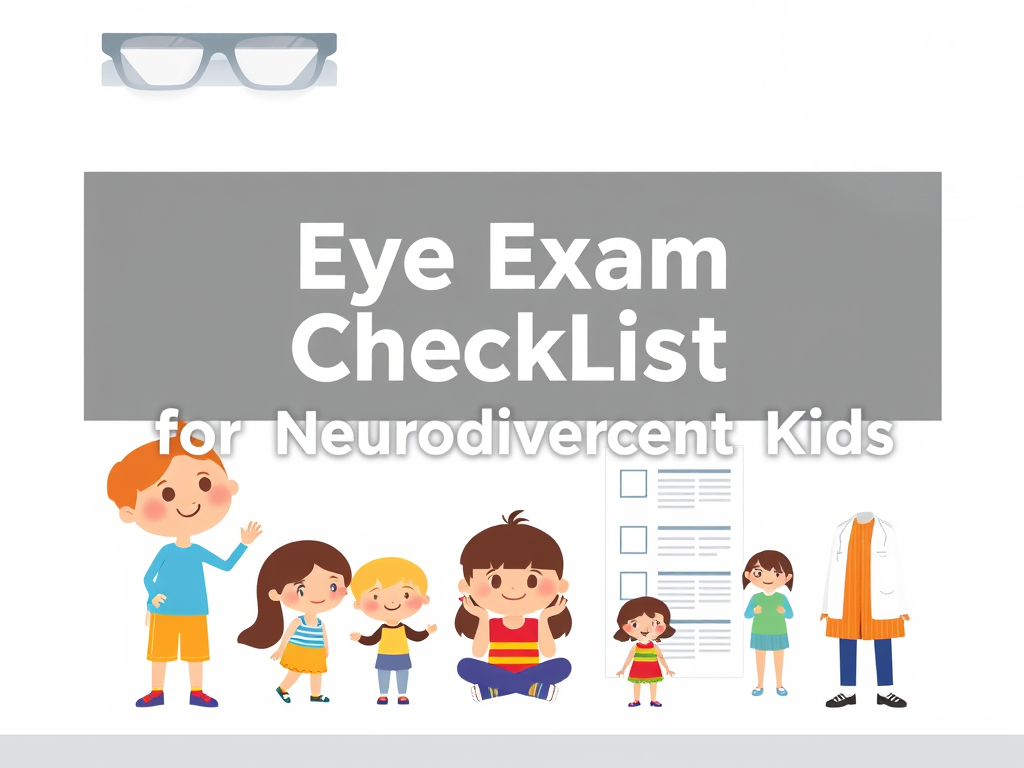
📝 Parent Checklist: Eye Exam for Neurodivergent Kids
Before the Visit:
- ☐ Ask if the ophthalmologist has experience with neurodivergent children.
- ☐ Request a longer appointment slot so your child doesn’t feel rushed.
- ☐ Tell the office about sensory needs: lighting, sounds, touching, waiting time.
- ☐ Bring comfort items (favorite toy, blanket, fidget).
- ☐ Prepare your child with pictures or videos of the office/equipment.
Questions to Ask the Doctor:
- Is my child’s vision 20/20, or do they have tracking/focusing issues?
- How is their depth perception?
- Are their eye muscles working together properly?
- Could vision be affecting their reading, writing, or balance?
- Are there signs of eye strain that could cause behavior changes?
- Should we limit screen time or change screen habits?
- How often should we come back for a check-up?
During the Visit:
- ☐ Ask the doctor to explain each step to your child before doing it.
- ☐ Take notes (or ask if you can record the explanation).
- ☐ Request a written copy of the exam results.
After the Visit:
- ☐ If there’s a diagnosis, ask for school accommodations (IEP/504 update).
- ☐ Share results with your child’s therapists/teachers.
- ☐ Follow up on any recommended therapy, glasses, or exercises.
📌 Parent Tip: Even if your child “passes” the school vision screen, still see an ophthalmologist every 1–2 years. School screenings are quick checks — they don’t test everything.
Subscribe at HirahCares.org for more parent-to-parent tips, doctor visit checklists, and our favorite neuro-friendly specialists.
 Hirahcares